
BRAND NEW: Our Impact Report for 2024-2025 is out now! See what we’ve been working on over the previous year.

Planning Your Route

Back to training modules

More Modules
Point-to-Point Roundel

What to think about when planning a route

  • Make sure the route is appropriate for your audience – distance, gradients, etc.
  • Think about the start point – toilets, refreshments, parking, bus route.
  • Avoid crossing busy roads, if possible.
  • Think about your target audience – start time.
  • Pre-walk the route and risk assess.

Walk planning

Walking routes should be:

  • Safe.
  • Simple.
  • Able to cater for all abilities.
  • Well maintained.

Wider footpaths allow people to overtake if they want to increase their pace.


Route Planning

Norfolk Trails

On the Norfolk Trails website you’ll find circular walks, long and short linear routes.

You can also find information on our access tested routes.

http://maps.norfolk.gov.uk/trails/
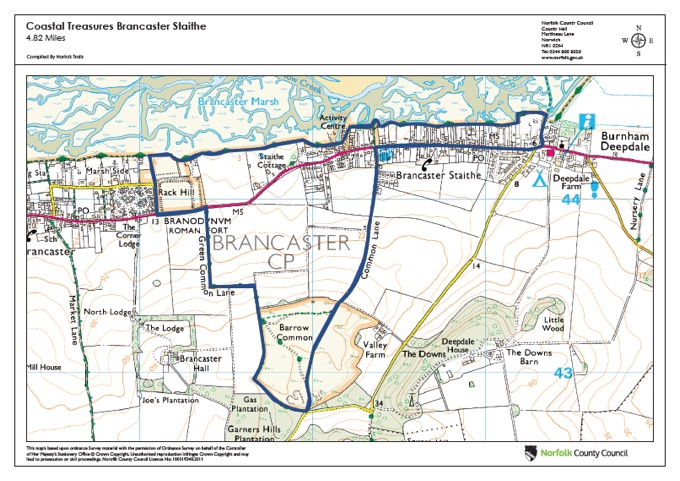
Brancaster Staithe

NCC Public Rights of Way map

If you like the idea of creating your own route from scratch, find a map of all the Public Rights of Way Norfolk has to offer on the norfolk.gov website.

http://maps.norfolk.gov.uk/highways/
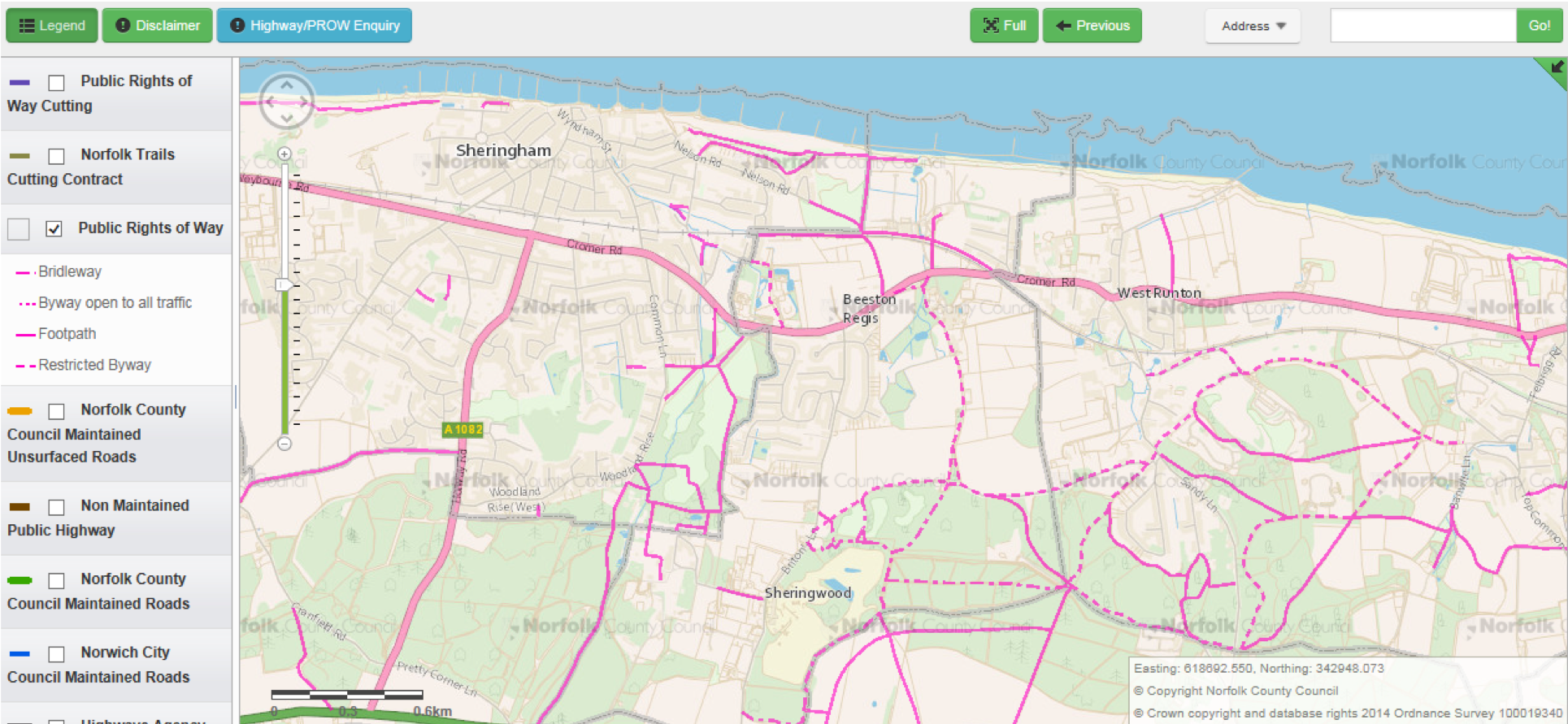
Right of Way

Creating a map

You can also create routes and calculate distance by using the following websites:


Go on a recce

Scouting your location prior to your event is a great way to assess its suitability, local facilities and accessibility.

Familiarising yourself with your route is also important as a part of your risk assessment!


Accessibility considerations

  • Location – not isolated, sensory, familiar – parks, proms – not main roads or traffic.
  • Accessibility – parking, and flat, hard surfaces.
  • Facilities – toilets and shelter from weather.
  • Refreshment venue.
  • Seating at regular intervals.
  • Walks need to be easily shortened or lengthened.
  • Location – not isolated, sensory, familiar (parks, proms), not on main roads or traffic.
  • Paths with similar smooth surface. Sudden changes, especially dark areas, could seem like holes or areas that people need to step over due to a reduction in space awareness and depth perception.
  • Entrances and access needs to be wide enough for wheelchairs.
  • Walks with high walls/hedges will mean that people in wheelchairs will have a reduced view – for example if walking by a river/sea/landscape.
  • Walks will be a social experience and so be prepared to stop and take in the fresh air and scenery.
  • Volunteers need to be friendly, patient, flexible and caring – for “Memory Walks” becoming a Dementia Friend would be an advantage.
Privacy Overview

Last updated May 2024

This website uses cookies so that we can provide you with the best user experience possible. Cookie information is stored in your browser and performs functions such as recognising you when you return to our website and helping our team to understand which sections of the website you find most interesting and useful.

This Cookie Policy explains how Active Norfolk ("Company," "we," "us," and "our") uses cookies and similar technologies to recognize you when you visit our website at  https://www.activenorfolk.org ("Website"). It explains what these technologies are and why we use them, as well as your rights to control our use of them.

In some cases we may use cookies to collect personal information, or that becomes personal information if we combine it with other information.


What are cookies?

Cookies are small data files that are placed on your computer or mobile device when you visit a website. Cookies are widely used by website owners in order to make their websites work, or to work more efficiently, as well as to provide reporting information.

Cookies set by the website owner (in this case, Active Norfolk) are called "first-party cookies." Cookies set by parties other than the website owner are called "third-party cookies." Third-party cookies enable third-party features or functionality to be provided on or through the website (e.g., advertising, interactive content, and analytics). The parties that set these third-party cookies can recognize your computer both when it visits the website in question and also when it visits certain other websites.


Why do we use cookies?

We use first- and third-party cookies for several reasons. Some cookies are required for technical reasons in order for our Website to operate, and we refer to these as "essential" or "strictly necessary" cookies. Other cookies also enable us to track and target the interests of our users to enhance the experience on our Online Properties. Third parties serve cookies through our Website for advertising, analytics, and other purposes. This is described in more detail below.


How can I control cookies?

You have the right to decide whether to accept or reject cookies. You can exercise your cookie rights by setting your preferences in the Cookie Consent Manager. The Cookie Consent Manager allows you to select which categories of cookies you accept or reject. Essential cookies cannot be rejected as they are strictly necessary to provide you with services.

The Cookie Consent Manager can be found in the notification banner and on our website. If you choose to reject cookies, you may still use our website though your access to some functionality and areas of our website may be restricted. You may also set or amend your web browser controls to accept or refuse cookies.

The specific types of first- and third-party cookies served through our Website and the purposes they perform are described in the tabs below (please note that the specific cookies served may vary depending on the specific Online Properties you visit)